Introduction
For many families, daily routines can become challenging when a child struggles to communicate or manage certain behaviors.
Simple moments — like mealtime, getting dressed, or asking for help — can feel overwhelming for both the child and the parent.
ABA therapy focuses on these real-life moments — helping children build skills that support smoother, more predictable daily experiences.
Why Communication and Behavior Are Connected
In many cases, behavior is a form of communication — especially when a child does not yet have the tools to express their needs clearly.
When a child struggles to communicate what they want or feel, it may show up as frustration, withdrawal, or challenging behavior.
How ABA Improves Communication
ABA therapy supports communication by:
- Teaching children how to request needs (using words, gestures, or tools)
- Building language step by step
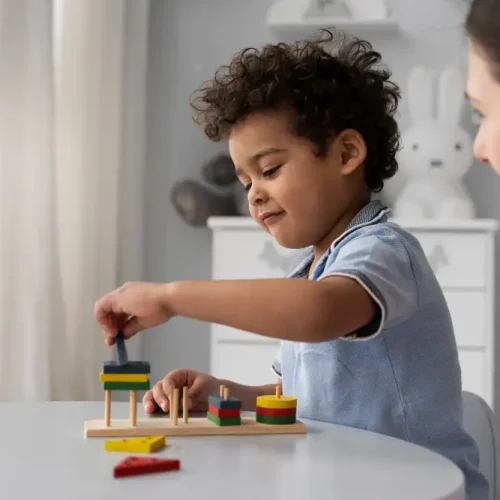
- Encouraging interaction through structured play
- Reinforcing successful communication attempts
Progress often starts small — but builds steadily over time.
How ABA Helps with Behavior
ABA focuses on understanding the reason behind a behavior — not just stopping it.
This involves:
- Identifying triggers (what happens before the behavior)
- Understanding the function (why it occurs)
- Teaching alternative, more effective responses
For example, a child who becomes frustrated and throws objects may be learning how to communicate a need or escape a situation. ABA therapy helps replace that behavior with a more appropriate way to express themselves.
Why In-Home Therapy Makes a Difference
In-home ABA therapy allows children to learn in the environment where they feel most comfortable.
This helps them:
- Practice real-life skills
- Apply learning across daily routines
- Build confidence in familiar settings
It also allows parents to stay involved throughout the process.
The Role of Parents in Progress
Progress does not only happen during sessions — it continues throughout the day.
Parent training helps you:
- Reinforce skills consistently
- Respond to behaviors effectively
- Support your child with confidence
At SamBright, care is always family-centered, because lasting progress happens when everyone is aligned.
Final Thoughts
Progress in communication and behavior takes time, consistency, and the right support system. With a structured, personalized approach, children can develop skills that make daily life more manageable and engaging.
Want to see how ABA therapy can support your child at home?
Schedule a consultation today — and let’s build a plan together.
⚠️ Disclaimer
This article is intended for informational purposes only and does not replace professional medical or behavioral advice. Services are provided by qualified professionals and are based on individualized clinical assessments. Individual outcomes vary.